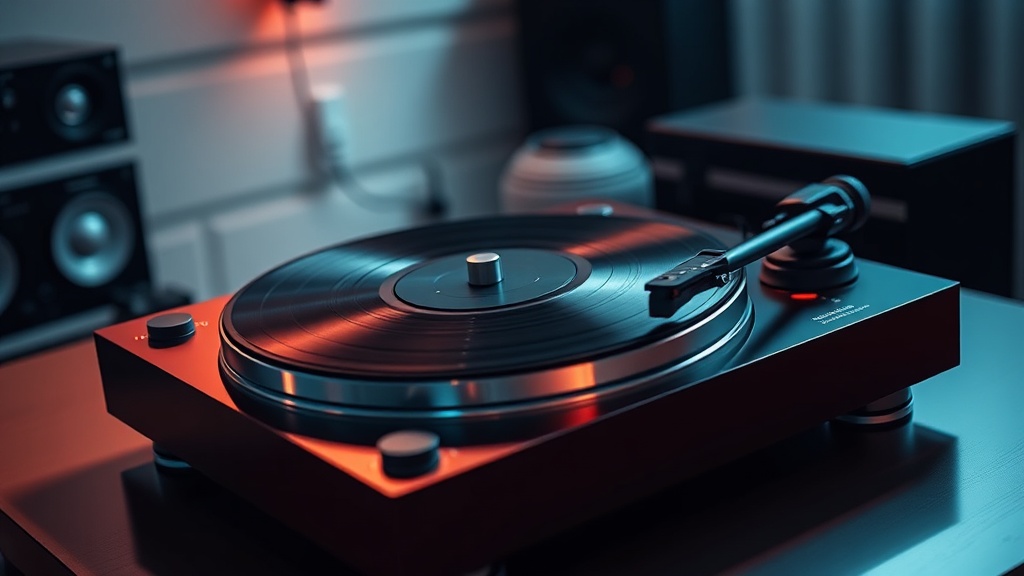
Selecting the Right Turntable for Your Dedicated Listening Space

What actually matters when choosing a new turntable?
Are you staring at a wall of technical specifications, feeling overwhelmed by the sheer number of decimal points and technical jargon? You aren't alone. Selecting a turntable isn't just about picking a pretty piece of wood or a sleek piece of metal; it's about how that machine interacts with your specific room, your existing speakers, and your long-term listening habits. A turntable is a mechanical instrument—a delicate balance of physics and engineering—and making the wrong choice can lead to more than just a mediocre sound. It can lead to damaged records or a setup that feels out of place in your home.
The first thing to understand is that your turntable doesn't live in a vacuum. It exists within a system. If you're building a high-end setup, your turntable needs to be a worthy partner to your amplifier and speakers. If you're just getting started with a modest bookshelf setup, you don't need to spend a fortune on a high-end deck that your current equipment can't even fully express. This guide looks at the variables that actually influence sound quality and long-term usability.
Is a belt drive or direct drive better for your setup?
This is often the first major fork in the road for any buyer. The distinction between these two mechanical layouts affects everything from how your music starts to how much vibration your setup can handle. Let's break down the differences without the fluff.
- Belt Drive: Most high-fidelity, audiophile-grade turntables use a belt drive. The motor is separated from the platter by a rubber belt, which helps isolate the platter from motor vibrations. This results in a very quiet, smooth rotation that is excellent for critical listening.
- Direct Drive: Here, the motor is directly underneath the platter. You'll find these more often in DJ equipment or high-end Technics models. They offer incredible torque and speed stability, making them perfect if you're looking to scratch or want instant playback, though they can sometimes introduce more motor noise into the signal.
If your goal is purely sitting on the couch and enjoying a deep, immersive listening session, a belt drive is generally the preferred route. However, if you're looking for a machine that can handle a lot of physical interaction, direct drive is the way to go. You can learn more about the mechanical nuances of these systems through the technical documentation provided by Vinyl Engine, a great resource for technical specs and manual lookups.
How much space and vibration control do you need?
One mistake people make is treating a turntable like a standard piece of hi-fi gear. It isn't. It is an incredibly sensitive device that reacts to every footstep in the room or vibration from a nearby speaker. When you're selecting a model, consider the footprint. A heavy, high-mass turntable is often more forgiving of external vibrations, but it also requires a sturdy, dedicated surface.
Don't just look at the dimensions of the platter; look at the weight of the chassis. A lightweight, plastic-heavy turntable might look modern, but it's prone to feedback issues. You'll want to look for models with a high-density base. Also, consider the placement. If your turntable is sitting on the same shelf as your subwoofer, you're asking for trouble. Even with the best isolation feet, the low-frequency energy from a speaker can cause the needle to jump or create a muddy sound.
Does the built-in preamp actually matter?
This is a major point of contention in the hobby. Many entry-level turntables come with a built-injection phono preamp. This is a great feature for beginners because it allows you to plug directly into any powered speaker or standard AUX input. It simplifies the setup significantly. However, as you progress, you might find that these built-in preamps are the bottleneck in your sound quality.
A dedicated external phono stage—a separate box that amplifies the tiny signal from the needle—will almost always outperform a built-in one. If you're looking for a machine that can grow with you, look for a turntable that has a switch to bypass the internal preamp or one that is designed to be used with an external one. This gives you the flexibility to upgrade your sound in stages rather than having to replace the whole turntable later. For more deep dives into signal paths, the enthusiasts at Stereophile offer excellent reviews on how different preamps affect the final output.
When you are browsing, pay attention to the tonearm. The tonearm is the bridge between your record and your ears. A high-quality tonearm with a well-balanced counterweight allows for precise control over tracking force. If the weight is too light, the needle might skid; too heavy, and you'll wear down the grooves of your precious vinyl. This isn't a machine you want to "set and forget" without a bit of calibration. It requires a bit of patience, but the reward is a much clearer, more detailed sound profile.
Lastly, think about the longevity of the components. A cheap turntable might use a fixed cartridge that you can't replace or upgrade. That's a dead end. A better investment is a model that allows you to swap out the stylus or the entire cartridge easily. This makes the turntable a permanent part of your collection rather than a temporary gadget. You want a machine that stays in the family, not something you'll be replacing in eighteen months because the sound became too dull.