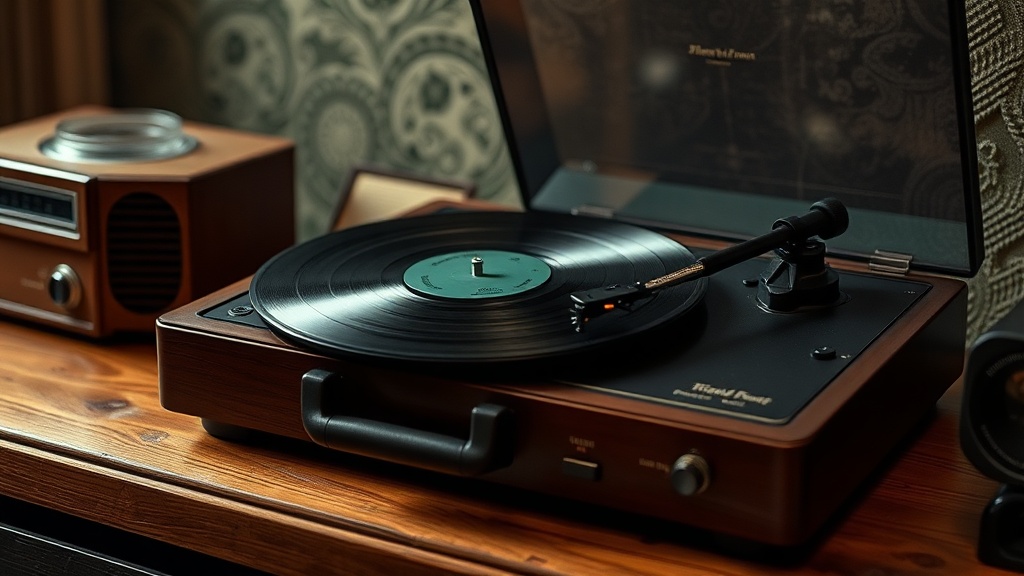
Complete Guide to Buying Vintage Record Players in 2024

Vintage record players have made a stunning comeback in recent years. Whether you're a new collector looking for your first turntable or an audio enthusiast hunting for a specific model from the 1970s, this guide covers everything you need to know. You'll learn how to evaluate condition, spot red flags, understand pricing tiers, and make a purchase that actually delivers great sound. The market is flooded with options—from thrift store finds to meticulously restored classics—and knowing what separates a gem from a money pit will save you hundreds of dollars (and plenty of headaches).
What Should You Look for When Buying a Vintage Record Player?
A good vintage turntable should have a functioning tonearm, a stable platter, and minimal motor noise. Check that the tonearm moves smoothly across the record without wobbling or sticking. The platter—the circular part that holds the record—needs to spin at consistent speeds. If it warbles audibly, the motor or drive system likely needs work.
Start with the basics. Plug the unit in and watch how it behaves. Does it power on? Do the speed controls respond? Listen for grinding, humming, or clicking sounds that indicate internal problems. A well-maintained vintage player should run quietly—almost silently—when no record is playing.
The stylus (needle) condition matters enormously. A worn needle damages records. Look for a clean, pointed tip. If it's flattened or caked with dust, budget for a replacement immediately. Most vintage players use standard-mount cartridges, so finding replacement styli isn't difficult. That said, some rarer models require specialized parts that cost significantly more.
Here's a quick checklist for your inspection:
- Cosmetic condition: Scratches and wear are normal; cracks in the plinth (base) or dust cover are not
- Speed stability: Test at 33, 45, and 78 RPM if applicable—use a phone app to verify accuracy
- Cueing mechanism: The lever that lifts and lowers the tonearm should operate smoothly
- Auto-stop function: If present, ensure it actually stops the platter at the record's end
- Outputs and wiring: Check for frayed cables, loose RCA connectors, or corroded ground terminals
How Much Should You Pay for a Vintage Turntable?
Expect to spend between $50 and $400 for a quality vintage turntable in working condition. Entry-level models from brands like Pioneer or Sony typically run $75-$150. Mid-tier classics—think Technics SL-1200MK2 or Thorens TD-160—command $300-$600 depending on condition. Rare audiophile-grade units from Micro Seiki or Technics SP-10 can exceed $1,000.
The catch? Price doesn't always equal value. A $100 Pioneer PL-518 in good working order often outperforms a $400 "vintage-inspired" modern turntable. Original build quality from the 1970s and 1980s generally exceeds contemporary budget options. Metal platters, heavy bases, and direct-drive motors were standard back then—features that cost extra today.
| Price Range | What to Expect | Example Models |
|---|---|---|
| $50-$100 | Entry-level, may need minor repairs or new stylus | Pioneer PL-518, Sony PS-LX2, Technics SL-BD20 |
| $150-$300 | Solid condition, good sound, minimal issues | Technics SL-D2, Dual CS 505, Thorens TD-145 |
| $300-$600 | Excellent condition or sought-after models | Technics SL-1200MK2, Thorens TD-160, Pioneer PL-550 |
| $600+ | Audiophile grade, rare, or fully restored | Micro Seiki SX-8000, Technics SP-10MK2, Garrard 301 |
Worth noting: restoration costs add up quickly. A $50 thrift store find needing a new stylus ($30), belt replacement ($25), and internal cleaning ($100 if outsourced) suddenly costs $205. Always factor repair expenses into your budget. Buying from a reputable dealer—someone who has already serviced the unit—often provides better value than the cheapest option.
Where's the Best Place to Buy Vintage Record Players?
Local sources generally offer better value than online marketplaces. Estate sales, garage sales, and thrift stores let you inspect equipment before buying. You'll also avoid shipping damage—a real concern with delicate tonearms and heavy platters. Craigslist and Facebook Marketplace frequently list vintage gear at fair prices, especially from sellers who inherited equipment and don't know its value.
Specialized audio shops and record stores increasingly stock refurbished vintage equipment. In San Diego, stores like Vinyl Junkies Record Shack and Record City occasionally carry serviced turntables with warranties. These command higher prices but eliminate the guesswork. Vinyl Engine maintains a directory of recommended dealers worldwide.
Online options exist but require caution. eBay offers the widest selection with buyer protection, though shipping costs for heavy turntables run $50-$100. Reddit's r/vinyl and AudioKarma forums have classified sections where enthusiasts sell to other enthusiasts—often honestly described and fairly priced. Reverb.com specializes in musical instruments and audio gear, attracting sellers who understand proper packaging.
Here's the thing about auctions: they breed competition. A Technics SL-1200 listed on eBay might attract twenty bidders and sell above market value. Local listings often go unnoticed by serious collectors. Check them early in the morning when new posts appear.
Red Flags to Avoid
Not every vintage find is worth your time. Skip units with these warning signs:
- Broken tonearm bearings: If the arm wobbles side-to-side or has visible play, repairs get expensive fast
- Missing parts: Counterweights, headshells, and dust covers are hard to replace for obscure models
- Heavy nicotine staining: Indicates years of neglect—smoke residue coats internal components
- Modified electronics: Amateur wiring "upgrades" often create hum and grounding issues
- No returns from distant sellers: Once shipped, you're stuck with whatever arrives
Direct Drive or Belt Drive: Which Vintage Type Sounds Better?
Direct-drive turntables generally offer better speed stability and torque, making them ideal for genres with heavy bass or for listeners who value precision. Belt-drive designs isolate motor vibration more effectively, which some listeners prefer for acoustic and classical music. Both can sound excellent—your choice depends on priorities.
The legendary Technics SL-1200 series epitomizes direct-drive excellence. Introduced in 1972, these tables feature quartz-locked speed control and massive torque. DJs adopted them; audiophiles respect them. A well-maintained SL-1200MK2 tracks records flawlessly and holds value remarkably well.
Belt-drive classics like the Thorens TD-160 or Linn Sondek LP12 (the latter pushing beyond typical vintage price ranges) emphasize musicality over specifications. The elastic belt absorbs motor vibrations before they reach the platter. That said, belts degrade over time—plan to replace them every 5-10 years depending on use.
Idler-drive turntables represent a third category, common in the 1950s and early 1960s. Models like the Garrard 301 or Thorens TD-124 use a rubber wheel to transfer power from motor to platter. They deliver tremendous torque and punchy sound but require more maintenance—idler wheels harden and develop flat spots. Enthusiasts swear by their dynamics; beginners might find them temperamental.
Cartridge Considerations
The cartridge—the component holding the stylus—significantly impacts sound quality. Many vintage players use standard half-inch mount cartridges, allowing easy upgrades. Popular options include the Audio-Technica AT-VM95E ($69) for warm, forgiving sound or the Ortofon 2M Red ($99) for detailed, energetic presentation.
P-mount (T4P) cartridges appear on many 1980s Japanese turntables including Technics and Pioneer models. These plug in directly—no alignment needed—but offer fewer upgrade choices. Audio-Technica AT85EP and Grado Prestige Green make excellent P-mount options still in production.
What About Built-In Speakers and All-in-One Units?
Avoid vintage all-in-one console stereos and suitcase-style record players for serious listening. These compromise on virtually every component—lightweight platters prone to speed variation, ceramic cartridges that wear records quickly, and small speakers that distort at moderate volume. They look charming in retro-styled apartments but don't deliver the analog warmth that draws people to vinyl.
That said, certain vintage consoles from Voice of Music, Magnavox, or Zenith hold historical interest for collectors. If you absolutely want the furniture aesthetic, look for separate components—turntable, receiver, and speakers—housed in a single cabinet rather than truly integrated systems. At minimum, ensure the turntable has a magnetic cartridge and adjustable tracking force.
Maintenance Basics Every Owner Should Know
Owning vintage equipment means accepting some maintenance responsibility. Clean records before every play using a carbon fiber brush. Keep the stylus clean—a small brush or gel cleaner removes dust buildup. Check belt tension periodically if you own a belt-drive model.
Store turntables away from direct sunlight and heat sources. Cover them when not in use. If you notice speed fluctuations, lubrication might help—but use only plastic-safe oils in tiny amounts. Over-oiling attracts dust and damages mechanisms.
When in doubt, consult a professional. Vintage audio repair shops exist in most major cities. Expect to pay $75-$150 for basic servicing including speed calibration, tonearm adjustment, and internal cleaning. For high-value units, this investment preserves both performance and resale value.
"Vintage turntables reward patience and research. The best finds often come from estate sales where the seller remembers the unit working beautifully in 1978—and hasn't plugged it in since. Test everything, trust your ears, and don't rush the hunt."
The vintage market continues evolving. Prices for common models have stabilized after years of increases, while truly exceptional pieces keep climbing. Start with a solid mid-tier unit, learn its quirks, and upgrade as your ears develop. There's a certain satisfaction in spinning records on equipment older than you are—machines built when planned obsolescence wasn't yet standard practice. Your records deserve a player that treats them with respect.