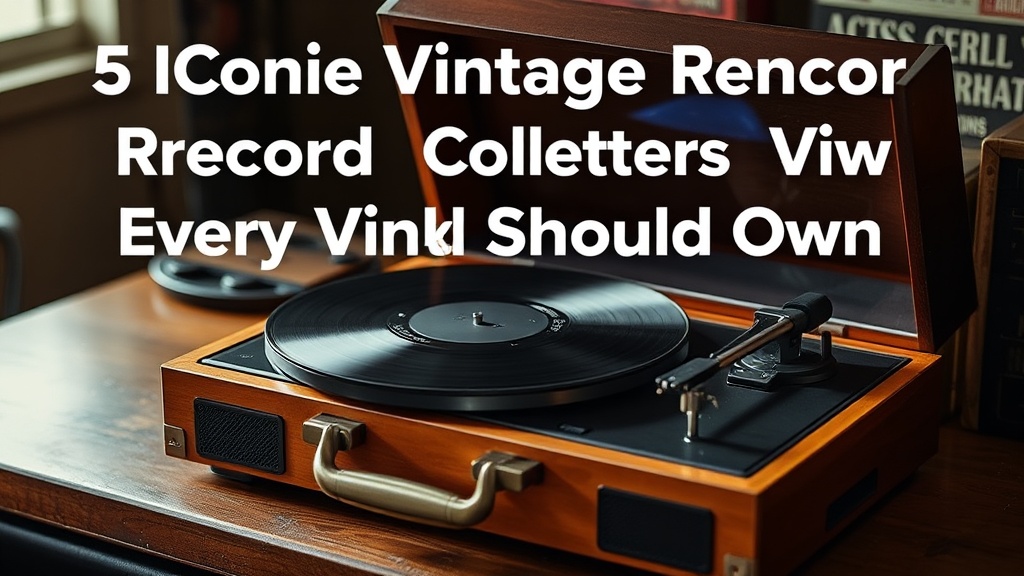
5 Iconic Vintage Record Players Every Vinyl Collector Should Own

Technics SL-1200MK2: The DJ Legend
Thorens TD-124: Swiss Engineering Excellence
Garrard 301: The British Broadcast Standard
Linn Sondek LP12: The Audiophile's Dream
Dual 1219: German Precision on a Budget
This post covers five vintage record players that defined vinyl culture—from broadcast studios to basement clubs—and explains why each deserves a spot in a serious collection. Whether building a first setup or hunting that grail table, these machines represent the best engineering, sound quality, and historical significance available in the vintage market.
What Makes a Vintage Record Player Worth Collecting?
A vintage record player becomes collectible through build quality, historical significance, and sound performance that stands the test of time.
Here's the thing—modern turntables are fine, but there's something about the heft of a 1970s direct-drive motor that digital just can't replicate. Collectors hunt for machines with solid construction, replaceable parts, and sonic character that shaped how generations experienced music.
Build quality matters most. Look for metal platters over plastic, heavy plinths that dampen vibration, and tonearms with adjustable counterweights. These components indicate engineering focused on longevity rather than cost-cutting.
Historical significance also drives value. The Technics SL-1200MK2 didn't just play records—it transformed DJ culture. The Linn Sondek LP12 sparked the high-end audio movement. These aren't just players; they're artifacts of musical history.
Which Vintage Turntable Should You Buy First?
The Technics SL-1200MK2 offers the best starting point for newcomers wanting proven vintage quality without excessive maintenance headaches.
The SL-1200MK2 debuted in 1979 and dominated club culture for decades. Its die-cast aluminum body weighs nearly 28 pounds—most of that is the heavy-rubber-damped platter. The S-shaped tonearm accepts virtually any cartridge, making upgrades simple.
That said, DJ tables aren't for everyone. If home listening matters more than scratching, consider the Thorens TD-160 Super. This belt-drive marvel from the 1970s isolates motor vibration beautifully. Prices range from $300-$600 for decent specimens.
Here's the catch? Both tables need attention. Expect to replace stylus cartridges, belts on the Thorens, and occasionally pitch faders on the Technics. Budget an extra $100-200 for immediate maintenance.
| Model | Drive Type | Era | Typical Price | Best For |
|---|---|---|---|---|
| Technics SL-1200MK2 | Direct-drive | 1979-present | $400-$800 | DJing, durability |
| Thorens TD-160 Super | Belt-drive | 1972-1980s | $300-$600 | Home listening |
| Dual CS-5000 | Belt-drive | 1980s | $250-$450 | Automatic convenience |
| Pioneer PL-518 | Direct-drive | 1970s | $200-$400 | Mid-range starter |
What Are the Most Iconic Record Players in History?
Certain turntables transcended their function to become cultural touchstones—these five models represent the pinnacle of vinyl playback engineering and collector desirability.
1. The Technics SL-1200MK2 (1979)
Mention vintage turntables and this Technics comes up immediately. Designed originally for broadcast use, DJs at New York clubs discovered its quartz-locked pitch control and rock-solid construction in the late 1970s. The rest is history—the SL-1200MK2 became the standard for hip-hop, techno, and house music.
The motor doesn't cog or waver. You can adjust pitch ±8% with dead accuracy. The chassis absorbs feedback even when placed on vibrating nightclub subwoofers. It's not subtle—this is a working tool built for abuse.
2. The Linn Sondek LP12 (1972)
Bill Gates owns one. So do countless audio obsessives. The Linn Sondek LP12 launched the high-end turntable industry by proving that source components mattered more than amplifiers or speakers.
This Scottish belt-drive design uses a suspended subchassis that isolates the platter from external vibrations. It's famously upgradeable—owners replace power supplies, tonearms, and even subchassis components over decades. A basic LP12 starts around $1,200 used but fully upgraded examples command $10,000+.
The catch? Setup matters enormously. The LP12 rewards patience and precise leveling.
3. The Garrard 301/401 (1953-1965)
Before direct-drive dominated, the Garrard 301 ruled professional broadcasting. This idler-wheel transcription turntable from England offered speed stability that competing belt-drives couldn't match. The heavy die-cast chassis and powerful motor started instantly without the belt sag common to contemporary designs.
Collectors prize original 301 models with grease-bearing platters (the 401 introduced oil bearings). Expect to pay $1,500-$3,000 for clean examples. These need restoration—capacitors dry out, idler wheels harden—but the engineering rewards the effort.
4. The Thorens TD-124 (1957-1967)
Swiss precision meets vinyl. The Thorens TD-124 served radio stations worldwide with its massive suspended chassis and multiple tonearm mounting options. Where the Garrard emphasized power, the TD-124 prioritized isolation—motor vibrations stay trapped in the subchassis while music floats free above.
Original TD-124s feature beautiful walnut plinths and visible mechanical engineering through inspection windows. Prices have climbed steadily; budget $2,000-$4,000 for collectible condition. Like the Garrard, expect to rebuild the idler assembly and replace dried lubricants.
5. The Acoustic Research XA/XB (1961)
Edgar Villchur's Massachusetts company changed everything. The AR XA introduced belt-drive suspension to consumer audio, proving that isolated turntables reduced rumble and improved clarity. It wasn't flashy—basic wood base, simple controls—but the engineering was revolutionary.
Vintage AR tables remain affordable at $150-$400. They're excellent restoration projects for beginners since the design is straightforward and parts are available. The walnut veneer plinths clean up beautifully with oil and steel wool.
Why Do Vintage Turntables Sound Different?
Vintage turntables sound distinct because their motor designs, platter materials, and tonearm geometries emphasize different aspects of musical reproduction.
Direct-drive tables like the Technics prioritize speed accuracy and torque. The motor connects directly to the platter—no belts, no idler wheels—creating immediate start-up and precise pitch control. Some listeners find direct-drive slightly clinical; others appreciate the tight bass and stable imaging.
Belt-drive designs isolate motor noise mechanically. A rubber belt absorbs vibration before reaching the platter, resulting in quieter backgrounds and—some argue—more natural musical flow. The trade-off? Speed fluctuations (wow and flutter) tend higher than direct-drive, and belts stretch over time.
Idler-wheel tables like the Garrard and early Thorens models use a rubber wheel pressing against the motor shaft and platter rim. This design offers tremendous torque and instant start-up but requires maintenance—those rubber wheels harden and develop flat spots.
Worth noting: your cartridge choice shapes sound more than the turntable itself. A vintage Shure M91ED sounds warm and forgiving; a modern Ortofon 2M Blue reveals more detail but demands cleaner records.
Where Should You Buy Vintage Record Players?
Local hi-fi shops, estate sales, and specialized online marketplaces offer the best vintage turntable hunting grounds.
Start with US Audio Mart or eBay for selection, but budget for shipping—these machines weigh 15-30 pounds packed. Condition matters enormously; a "working" table with dried grease bearings will fail within months.
Estate sales in affluent neighborhoods often yield pristine equipment. Older collectors maintained their gear meticulously. Bring a test record and portable preamp to verify operation before purchasing.
Specialized dealers like Vinyl Engine offer technical resources and classifieds from knowledgeable sellers. Expect to pay 20-30% premiums versus private sales, but reputable dealers service equipment before listing.
San Diego specifically hosts several excellent vintage audio shops—Vinyl Junkies in South Park maintains a rotating selection of serviced tables. The local market stays competitive due to collector density, but patience rewards diligent hunters.
The best vintage turntable isn't the rarest or most expensive. It's the one that gets played daily, spinning records that matter. Start with something serviceable—a Technics SL-1200MK2 or Thorens TD-160—and build from there. The journey of collecting, restoring, and truly listening beats any specification sheet.